Concept / Inspiration
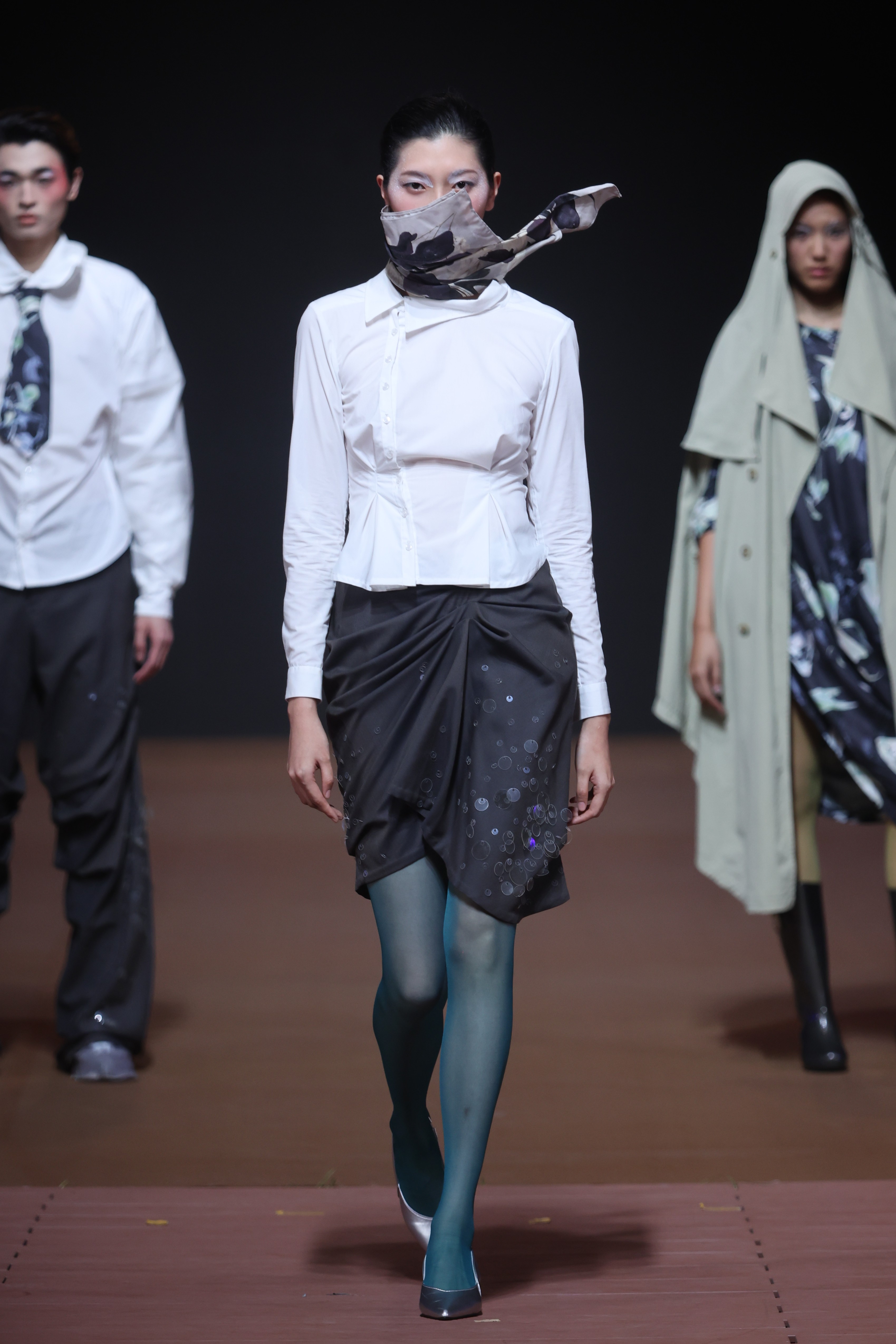
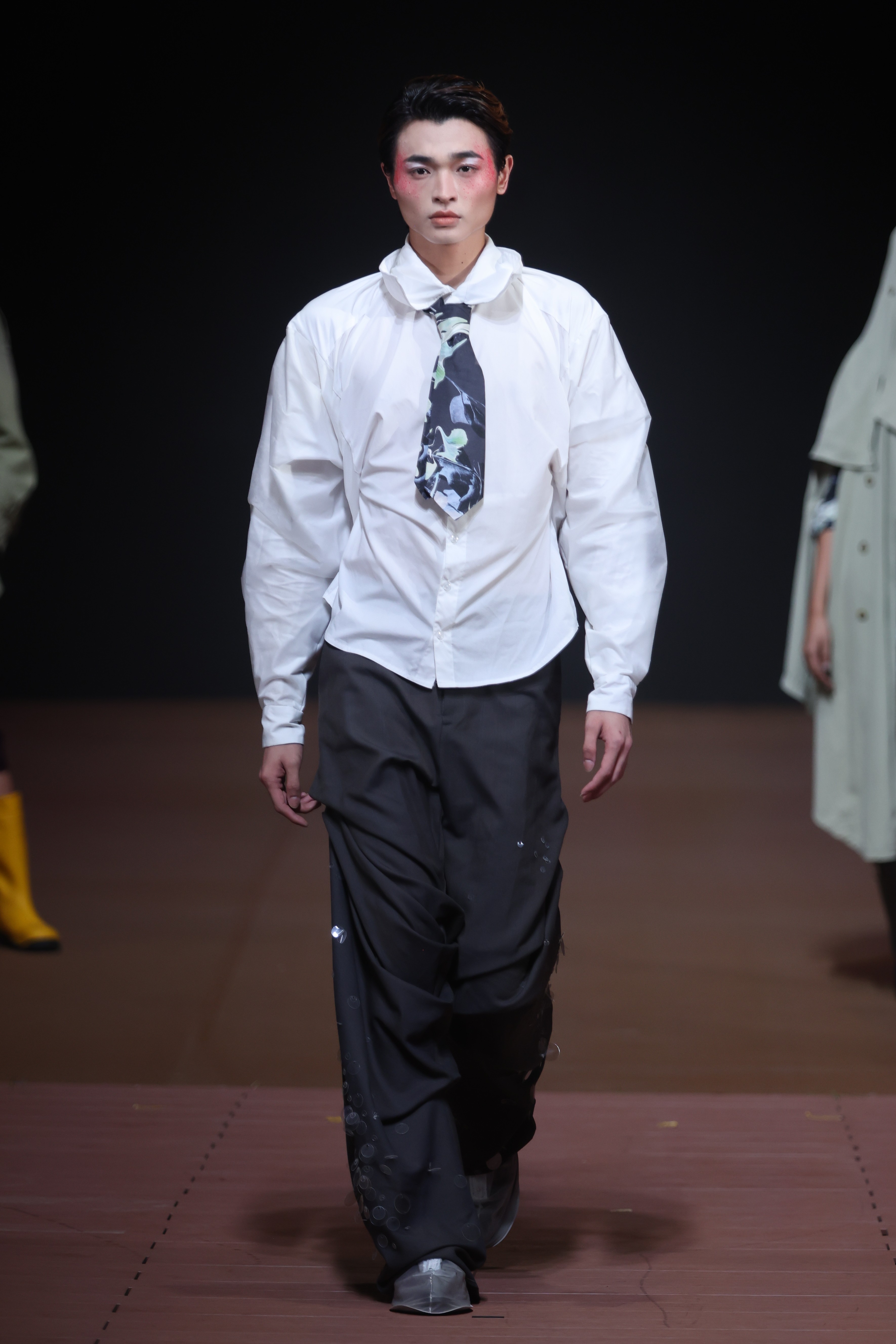
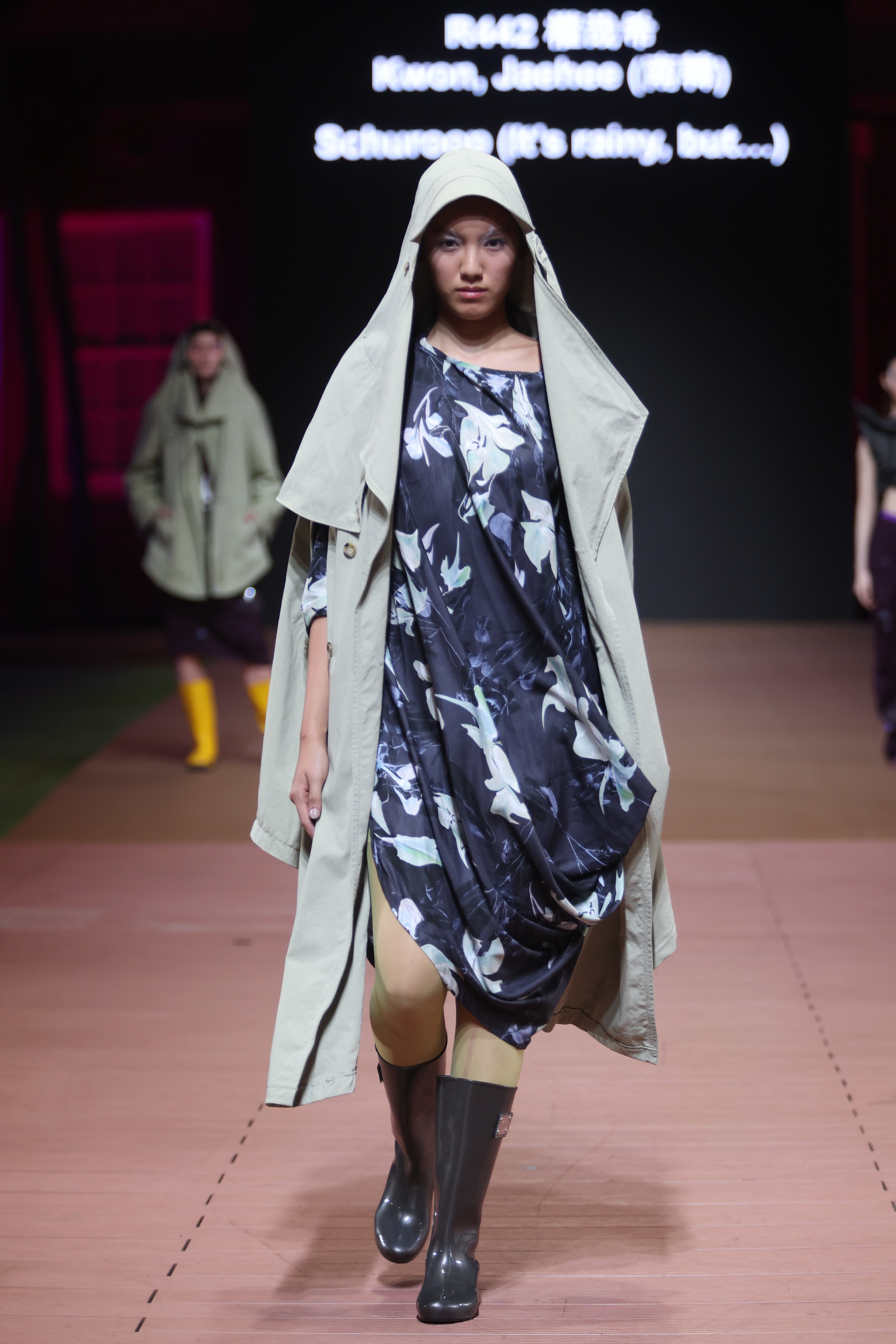
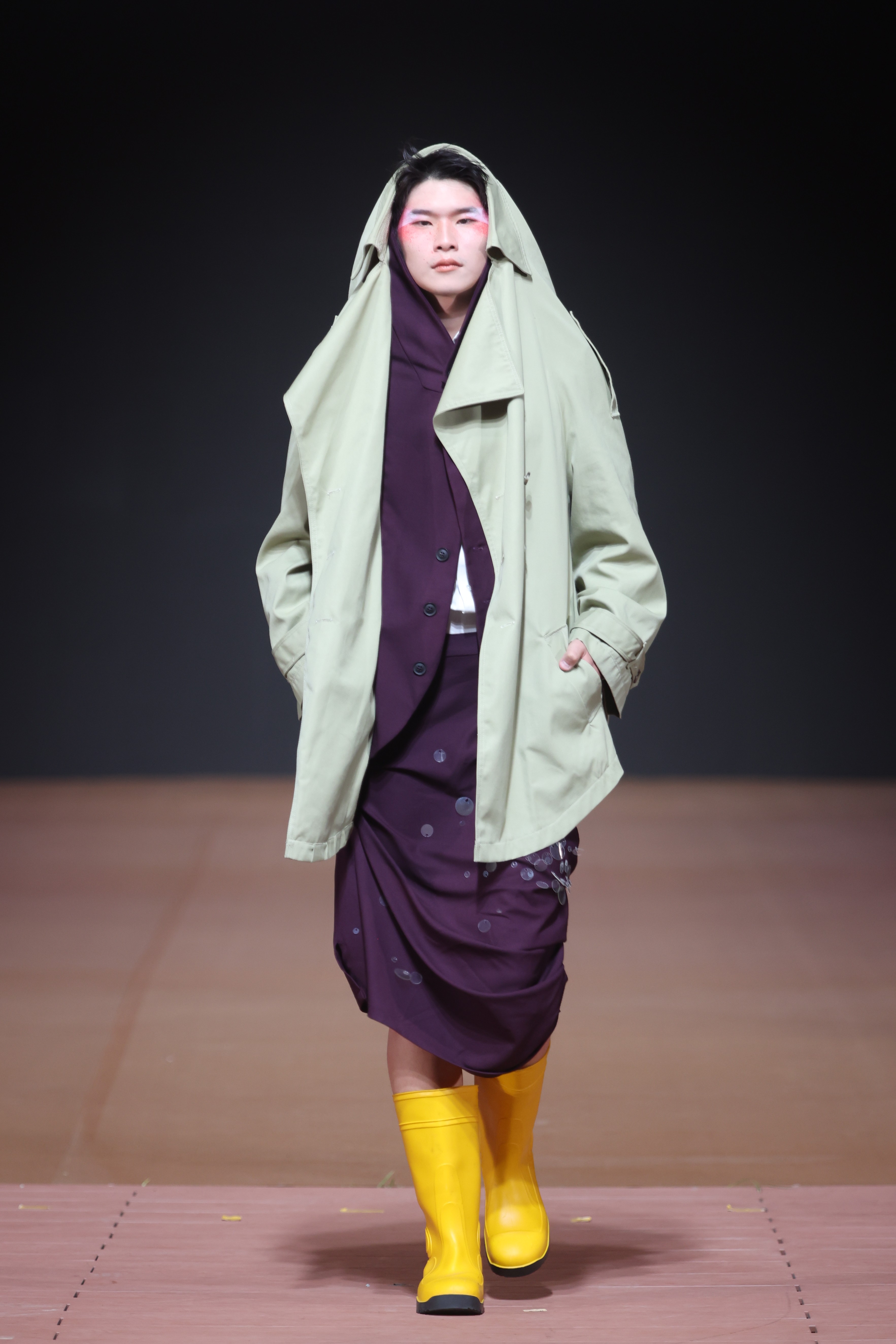
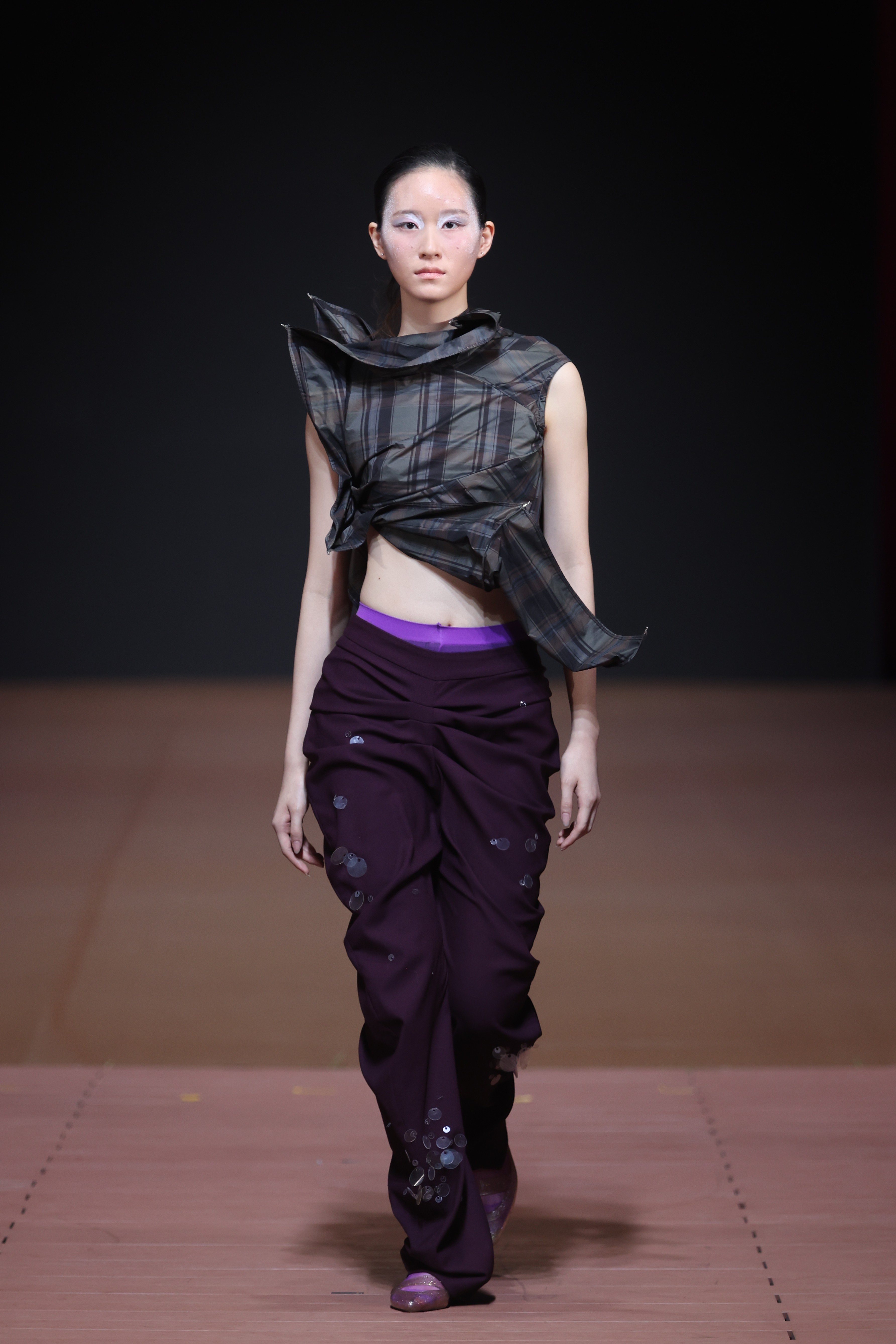
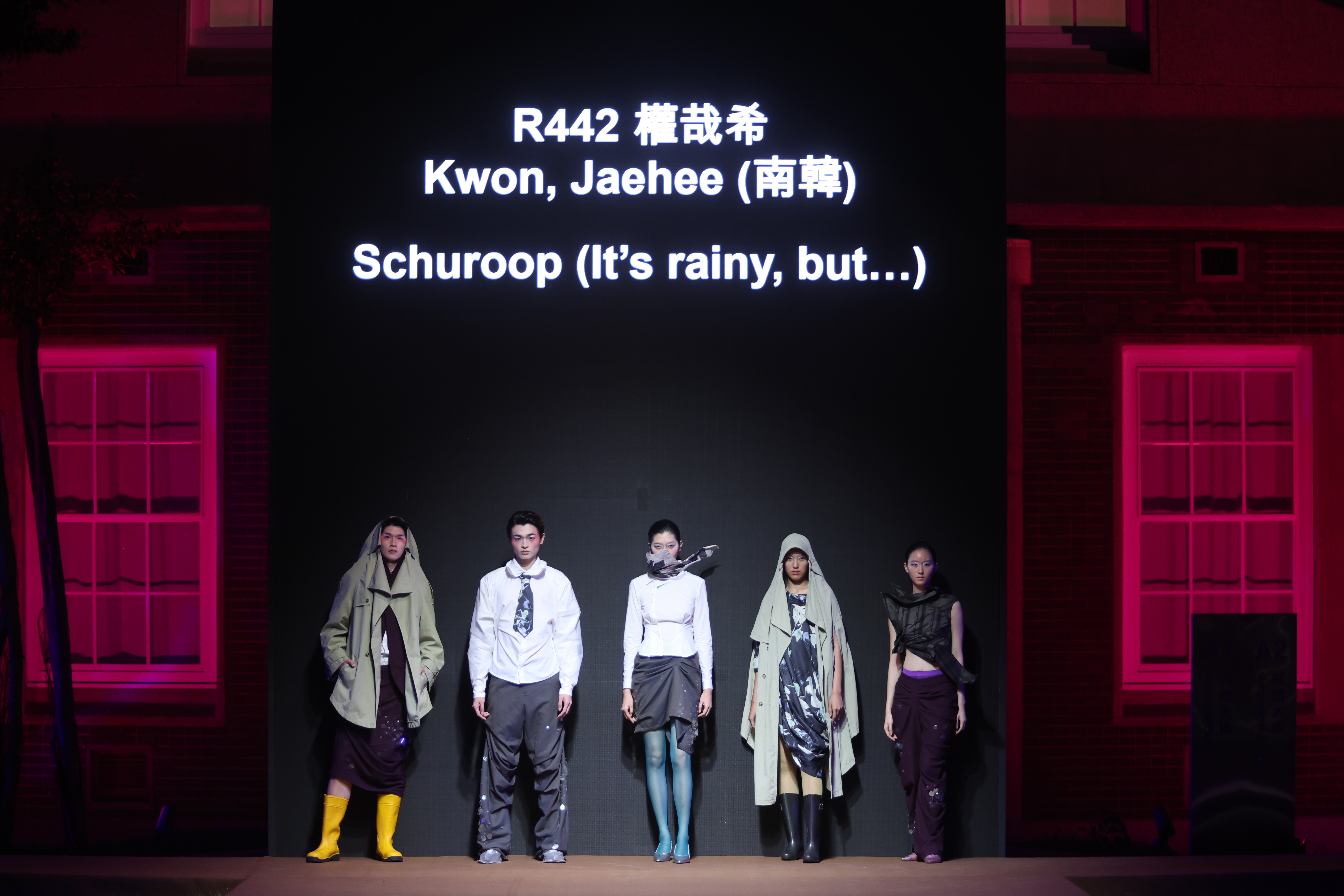
The collection originates from a childhood memory of walking home with my father on a rainy day in rural Yeongwol, South Korea. This personal experience led to the observation of creative protection strategies—the small, spontaneous gestures people make to protect themselves from rain, such as holding bags over their heads, lifting up their trousers or skirts, or instinctively curling their bodies for protection. These gestures and the movement of rain are translated into enveloping silhouettes, protective structures, soft transitions, and dynamic forms. By the deconstruction of vintage garments and draping, new forms that reflect the spontaneous gestures of protection are developed.
Through textile experiments with transparent, reflective, and lightweight materials, the collection explores how material behavior, surface, and movement can express the visual atmosphere of rain. This experimentation extends beyond pattern development, influencing the selection of technical fabrics and the strategic integration of sequins. These aesthetic choices define the collection’s visual language, ultimately connecting a personal childhood memory with the universal human experience of vulnerability, protection, and spontaneous adaptation.